chess.rodeo – game analysis, coach, puzzles and openings
chess.rodeo is my chess service, and I build it on my own. It launched at the end of 2025 as Stockfish game analysis, and by October 2026 it had grown into a trainer: a coach reads your games, bots play with character, and puzzles and openings come back on a schedule.
The service now holds 2.7 million imported games and 81 thousand analyses, and about 12 thousand people visit it each month. I updated this page in October 2026 and kept the screenshots of earlier versions at the bottom, so you can see how the service changed.

How it started
Game analysis on Chess.com and Lichess feels outdated: you wait for the game to process, then click back and forth through the moves to find your mistakes. I wanted to see where I went wrong right away, not after 15 clicks.
So I built chess.rodeo. The first version did one thing: it imported games and ran them through the engine.
Game analysis
Paste a Chess.com or Lichess username, a link to a game, or a PGN. Stockfish 18 analyzes every move and grades it: Brilliant (!!), Great (!), Good (✓), Inaccuracy (?!), Mistake (?) or Blunder (??).
Every game gets a one-line headline, for example "Was +9.9, still lost". Clicking it takes you to the move that decided the game. Next to it are the evaluation and clock graphs, both players' accuracy, and the coach's notes on the moves. You can turn a game into a video for social media.
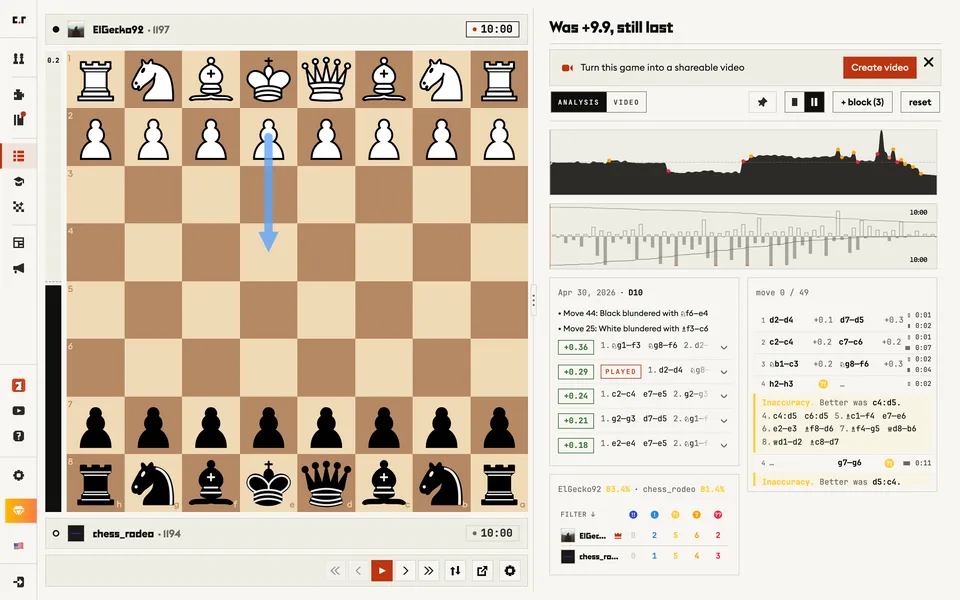
The Chrome extension opens the analysis straight from Chess.com in one click. I wrote about why it was needed in the post on dogfooding.
Coach
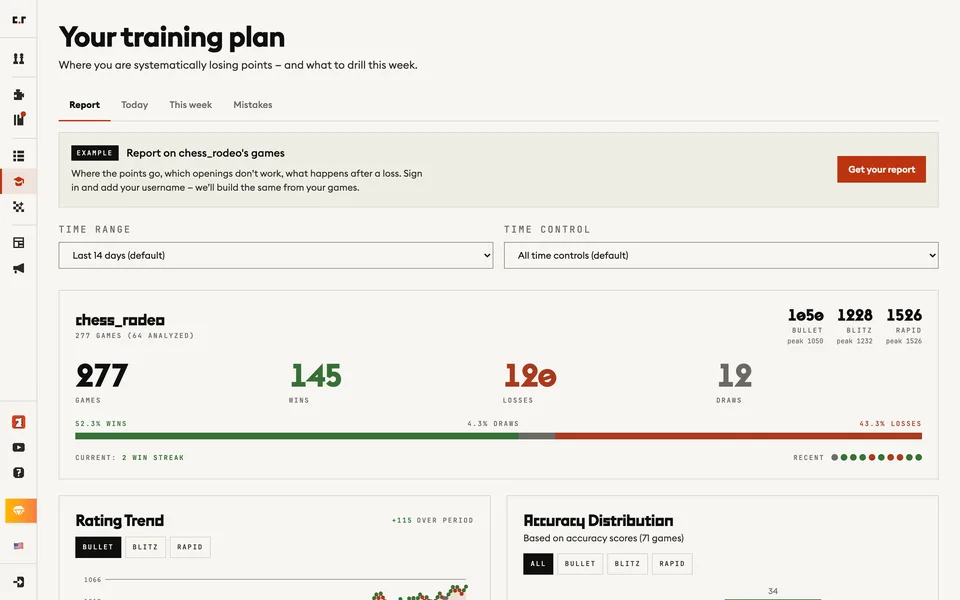
The coach reads your games and shows where you systematically lose points and what to work on this week. The report covers results, rating trend and accuracy. The plan gives you one habit for the week and the positions from your own games where it cost you.
Playing against bots
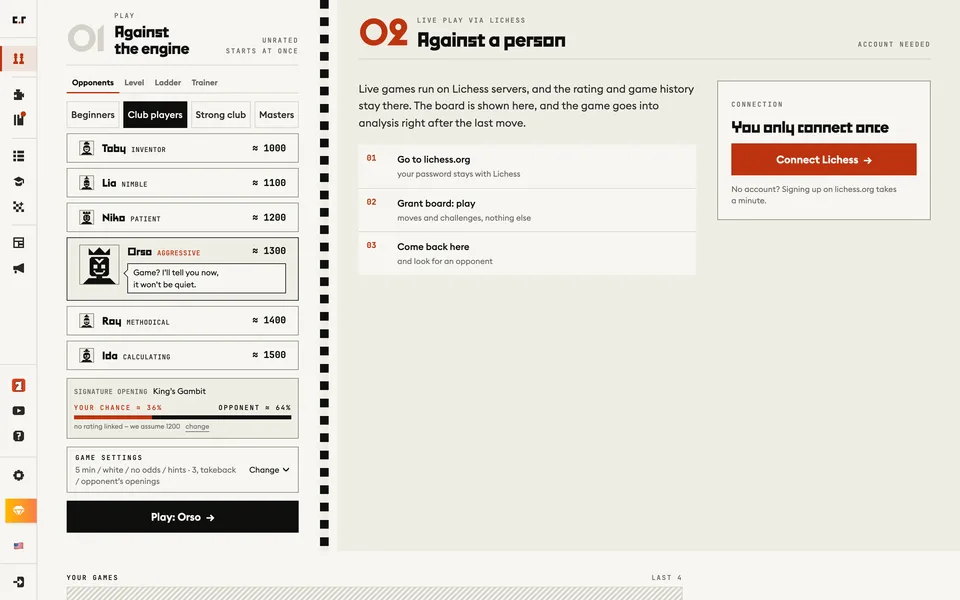
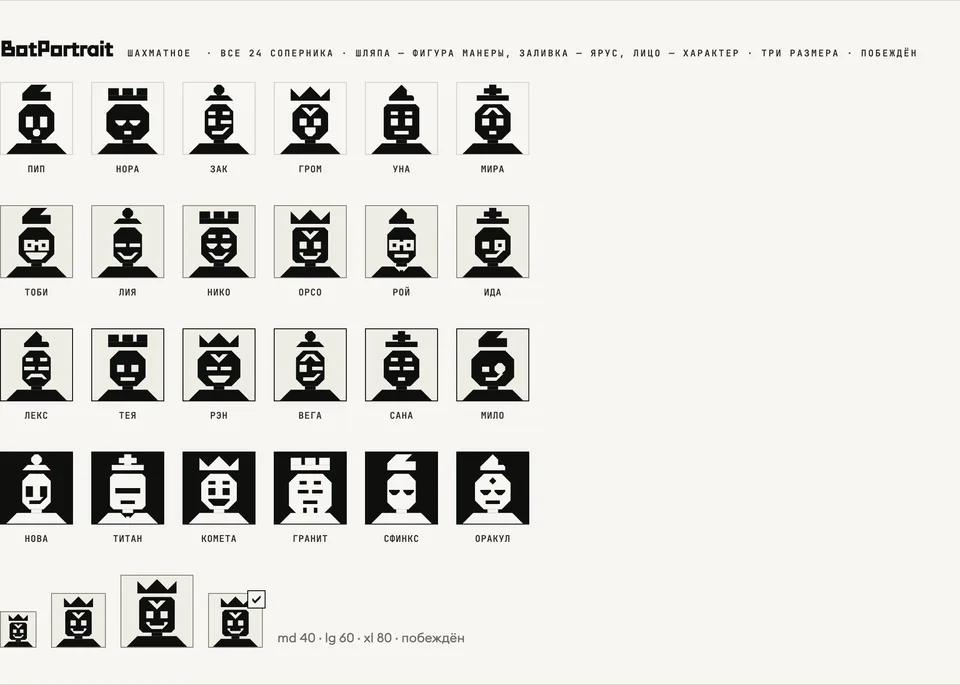
The service has 24 bots in four leagues, from beginners to masters. Each has its own rating, face and manner: Orso, for instance, is aggressive and warns you up front that it won't be quiet. The bots talk during the game: they greet you and react to a capture, a check or a blunder. You can play without signing in, and the service analyzes the game right after it ends.
Against a human, the game runs on Lichess servers: the board is here, the rating and game history stay there.
Puzzles
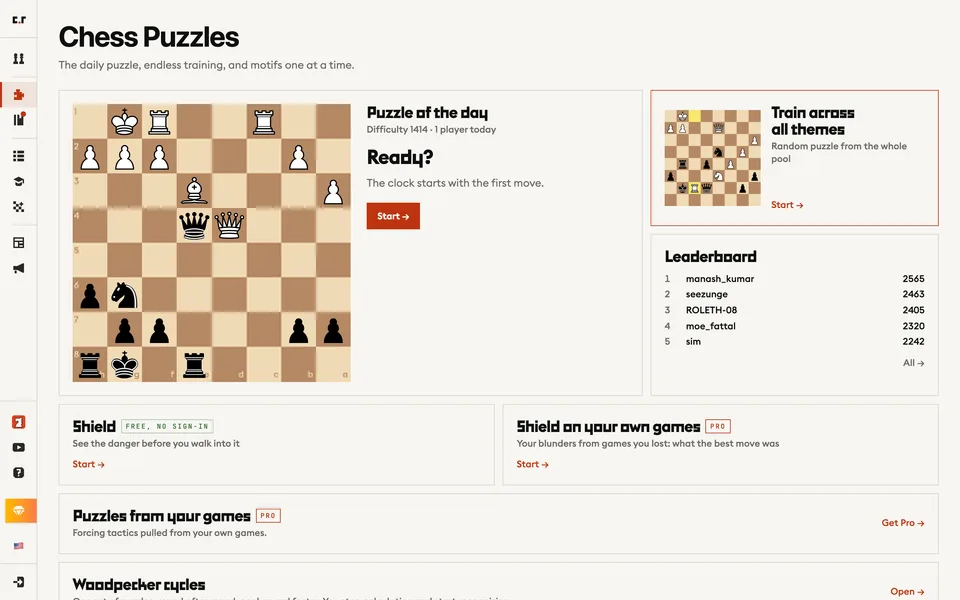
A daily puzzle, training by theme (checkmates, tactics, endgames, attacking the king) and a leaderboard. "Shield" teaches you to see a threat before you walk into it. Woodpecker cycles are a method where you solve the same set of puzzles in rounds, faster each time. In Pro, the coach pulls tactics out of your own games.
Openings
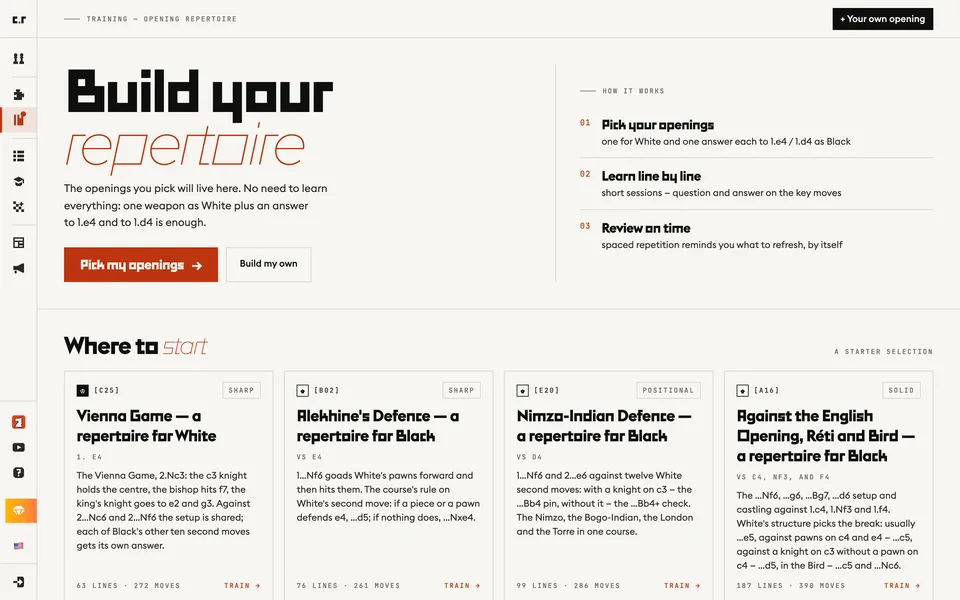
There are 23 ready-made courses, from the Sicilian Defense to the Vienna Game, and a builder for your own repertoire. You learn lines in short question-and-answer sessions, and spaced repetition reminds you when something needs refreshing.
Game library
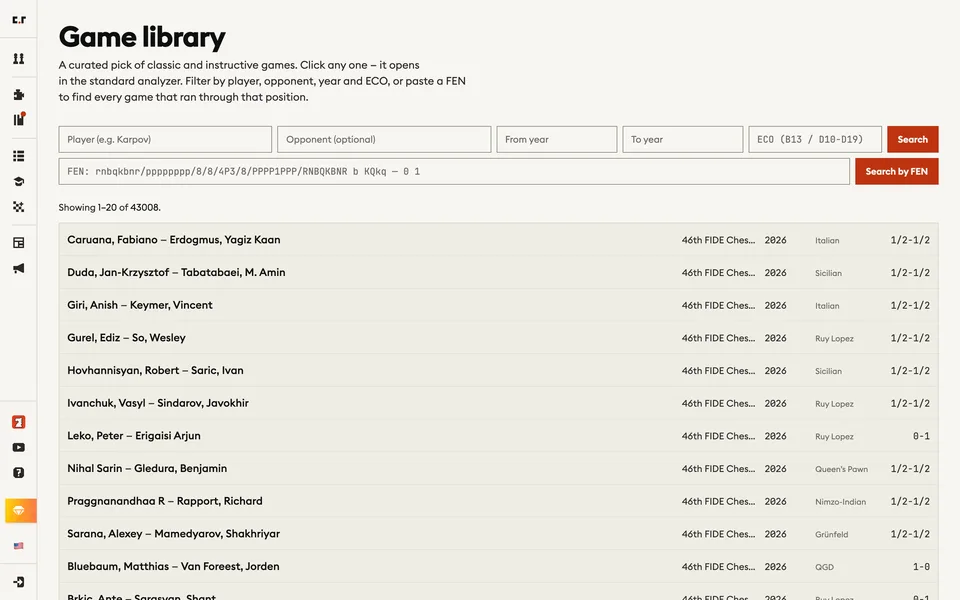
43 thousand classic and model games, searchable by player, year, opening and position: paste a FEN and find every game that passed through it. Any game opens in the analyzer.
Free and Pro
The service has outgrown the name "free chess game analyzer", but game analysis, playing against bots and puzzles by theme are still free. The paid Pro plan adds your own opening repertoire with a trainer, server-side analysis, mistake review and the coach's plan.
How I build it
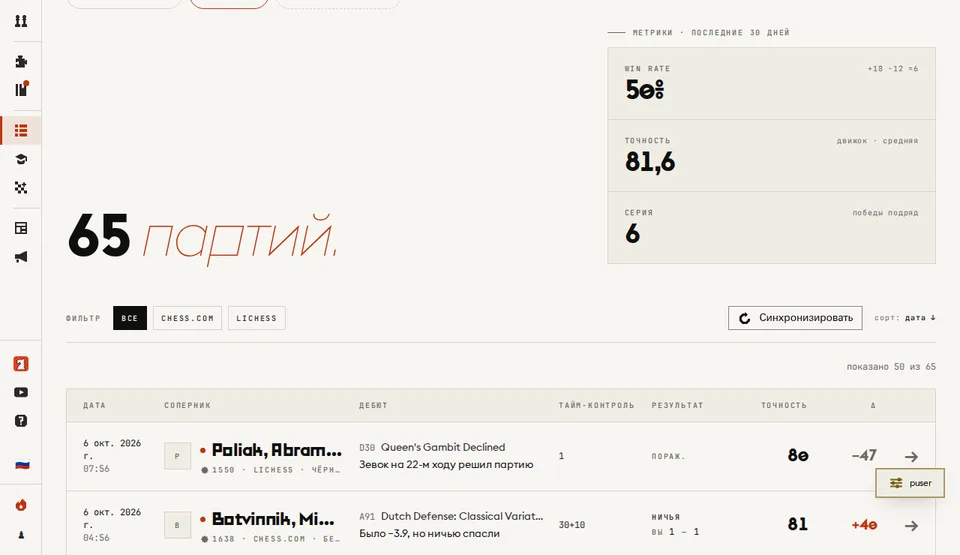
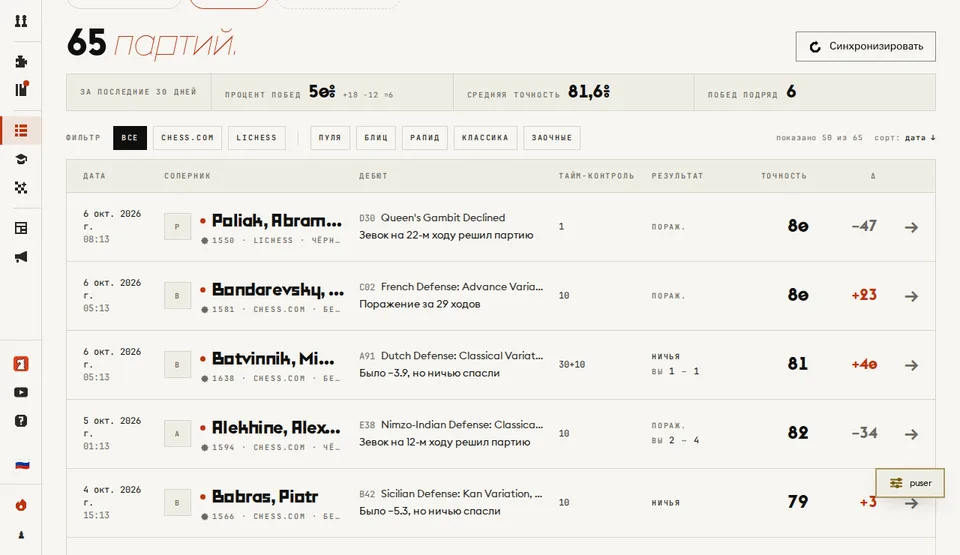
Since May 2026, more than 900 pull requests have been merged into the repository. Automation attaches before-and-after frames to each one: it walks the same scenario on a stand of the main branch and on a stand of the branch with the change, and posts the pairs in a comment. That way a change is shown, not described.
One example is the pull request "Game list: table on the first screen, time control filter". Before it, the metrics block took up the first screen and the table started below it:
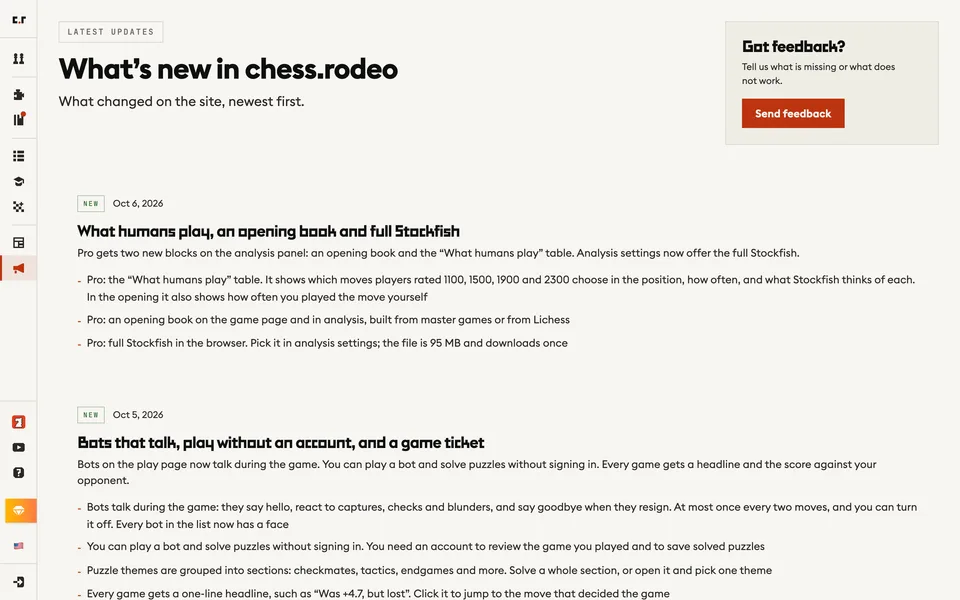
What changes for users goes on the "What's new" page.
Under the hood
Stockfish 18 runs both in the browser and on the server. The backend is written in Rust, the frontend in Next.js, and games are stored in PostgreSQL. The interface is translated into 16 languages.
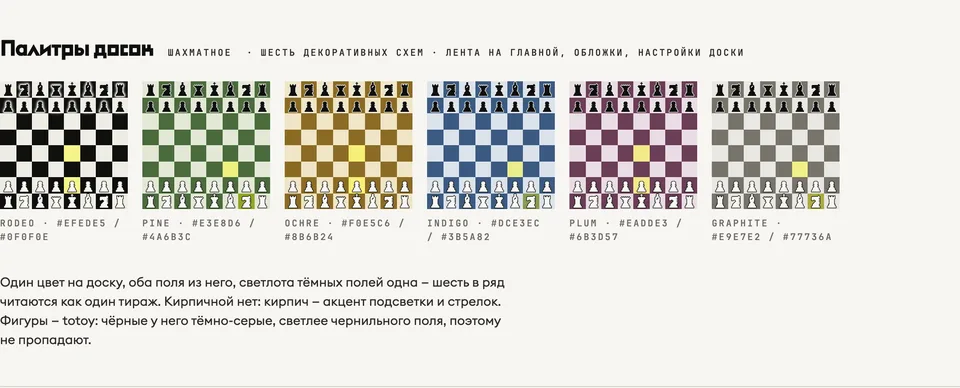
Boards on the home page and in the settings come in six color schemes:
What the service used to look like
January 2026. A dark theme, a serif logo, and one feature: importing and analyzing games.

April 2026. The square logo and play against the engine appeared; the interface was still dark.


More about the project
- chess.rodeo Logo Lab: how I chose the typeface and what grew out of it
- Hit the 1000 MAU mark, two months after launch
- Do not register domains on Cloudflare if your audience is in Russia and the follow-up to that story